


There are multiple ways to mount a light curtain as shown in Figure 1 including:
-
Fixed mount: The alignment depends on precise installation of both sender and receiver. The fixed mount has limited adjustments once the installation is complete.
-
QuickFix mount: Allows vertical movement (up and down)
-
FlexFix mount: Allows vertical and limited swivel movements to facilitate alignment
-
Swivel mount: Provides a large range of swivel movement but is locked vertically
 Canonical Article: Engineering Guide for Light Curtains

Figure 1: Mounting options for the SICK deTec4 light curtain.
Quality mounting brackets are vital for reliable operation
Mounting brackets are designed to firmly grip and hold the light curtain. This prevents movement under vibration or when an operator or technician bumps the equipment. Lesser mounts may not hold alignment, likely resulting in nuisance shutdowns until a technician realigns the light curtain.
To justify the design, ask yourself how much money is lost if the equipment is down for 30 minutes. The cost is plant-dependent but could easily enter the $100 per minute range. Now add this up over the 20-year lifecycle of the equipment.
Location determines bracketry
The light curtain is a safety device tightly integrated into the guarded machine. Consequently, the light curtain’s position and associated mounting hardware (bracketry) are non-trivial design decisions.
Let’s explore this concept using an example application featuring a light curtain guarding a welding robot. There are competing requirements:
-
The light curtain must necessarily be exposed so that it can do its job.
-
The light curtain must be protected from welding spatter and the operators and technicians who could accidentally strike the light curtain with tooling or work-in-progress.
Figure 2 from the SICK deTec4 Core operating instruction manual suggests a few options. We could flush-mount the light curtain (option 3) directly in the machine’s window. Alternatively, we could side-mount the curtain (options 1 or 2) so that the curtain components are mounted on the front of the machine. The second option may be optimal, as the curtain components are shadowed from the welding arc and the operator is less likely to strike the light curtain when removing material from the work cell.
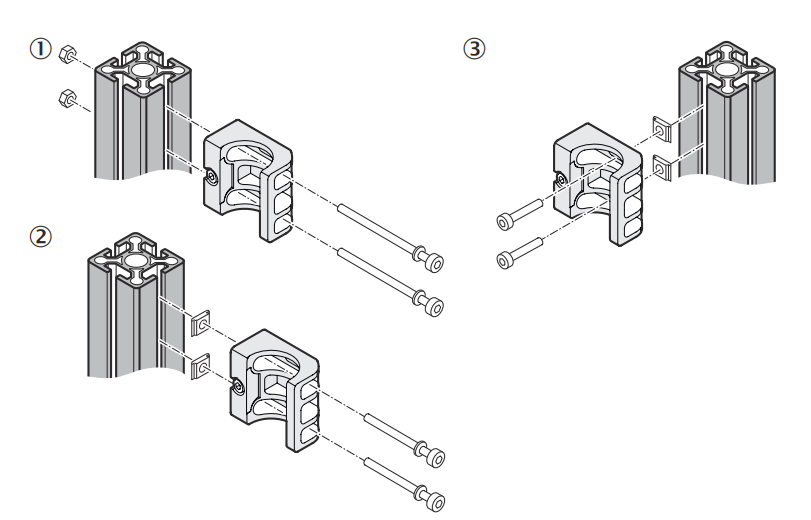
Figure 2: Installation options for the FlexFix bracket.
DigiKey sells light curtain brackets
Like many industrial components, light curtain families contain a large number of associated parts. For instance, we encountered four different bracket types (Figure 1) in this article. This is further complicated as brackets are offered in pairs or in quads to mount sender and receiver. The brackets may also be sold as part of a kit as shown in the upper right-hand corner of Figure 3.
How do I find the part numbers?
The part numbers for the light curtain accessories are found in the datasheet and instruction manuals for the individual light curtains. As an example, you can find the datasheet from the DigiKey product page for this representative deTec4 Core light curtain.

Figure 3: Collage of SICK deTec4 light curtain mounting hardware offered by DigiKey.
 Article by Aaron Dahlen, LCDR USCG (Ret.), Application Engineer at DigiKey