


This engineering brief examines the internal workings of an industrial safety light curtain with emphasis on circuit board details such as IR emitters, power supply, and microcontroller. The post includes high-resolution photographs showing the internal construction of a Banner Engineering EZ-Screen LP curtain as shown in Figure 1.
This article is part of the DigiKey Field Guide for Industrial Automation
Location: Understand It → Teardowns
Difficulty:  Student — difficulty levels explained
Author: Aaron Dahlen | MSEE | Senior Applications Engineer, DigiKey
Last update: 06 Mar 2026

Figure 1: A Pair of Banner EZ Screen LP light curtains on the author’s bench.
Warning
 Do not disassemble or modify a light curtain or any other industrial safety device. Doing so will compromise the equipment’s integrity leading to malfunction or serious injury.
This article is intended for educational purposes only. Material is presented in the spirit of learning in the hope that you will better understand a technology if you can visualize the internal components.
Robust Outer Shell
The exterior components for the light curtain are presented in Figure 2. Together, these components provide an IP65-rated protection for the electronics (dust tight and water resistant).
In the picture we see:
-
Top: Aluminum housing
-
Middle left to right:
- Mounting clamp
- Top cover
- Bottom cover
- Light pipe to transfer the light from a PCB-mounted LED
-
Bottom: Long thin red IR-transparent window
I should mention that a light curtain is surprisingly difficult to disassemble. The adhesives and IP65 environmental sealants truly want to hold the assembly together.

Figure 2: The outer shell components for the light curtain.
IR Emitters
Figure 3 presents an image of the infrared (IR) emitters. Actually, we are looking at the lenses placed on top of each emitter. This lens ensures that the beams exit as a series of parallel beams with minimal spreading. This image also suggests a cost-saving assembly method. We speculate that lights curtains are constructed in N-length units, where N is the length of an individual IR module. This is a common industry design, although not confirmed with the Banner products.
The image includes calipers set to 10 mm to show the distance between the sensors. This uniform distance and close beam spacing is a critical element of industrial safety. This particular curtain falls into DigiKey’s finger protection category. This allows quick detection (safety shutdown) as an operator approaches the guarded section of the machine. Refer to this article to further explore the distinction and implications of a finger vs a hand-rated light curtains. According to Banner documentation these decisions are made in accordance with ANSI B11.19 and ISO 13855.

Figure 3: Image of the IR emitters with a 10 mm spacing.
Power Supply and Input Protection
As a general statement, industrial components are designed to a high standard when compared to general electronics assemblies. This is doubly true when we consider that a light curtain is a safety device designed to guard a machine. We would expect nothing less when we consider the power supply section of the light curtain as shown in Figure 4:
- Bidirectional TVS for transient voltage suppression
- Polarity protection for those moments when we forget that brown is hot (24 VDC)
- Fuse protection
- Low voltage switch mode power supply for the microcontroller
In addition, we also see a connector for the external cable. The matching card-edge connection is shown in Figure 5.
This Banner Removable Disconnect (RD) is a convenient design feature as many different cable lengths are available to match your project. For example, DigiKey offers cables ranging from the short M12 connector all the way to 100-foot (30.48 m) cables with flying leads. Be sure to consult Banner’s EZ-SCREEN LP (Low-Profile) Safety Light Curtain Instruction Manual.
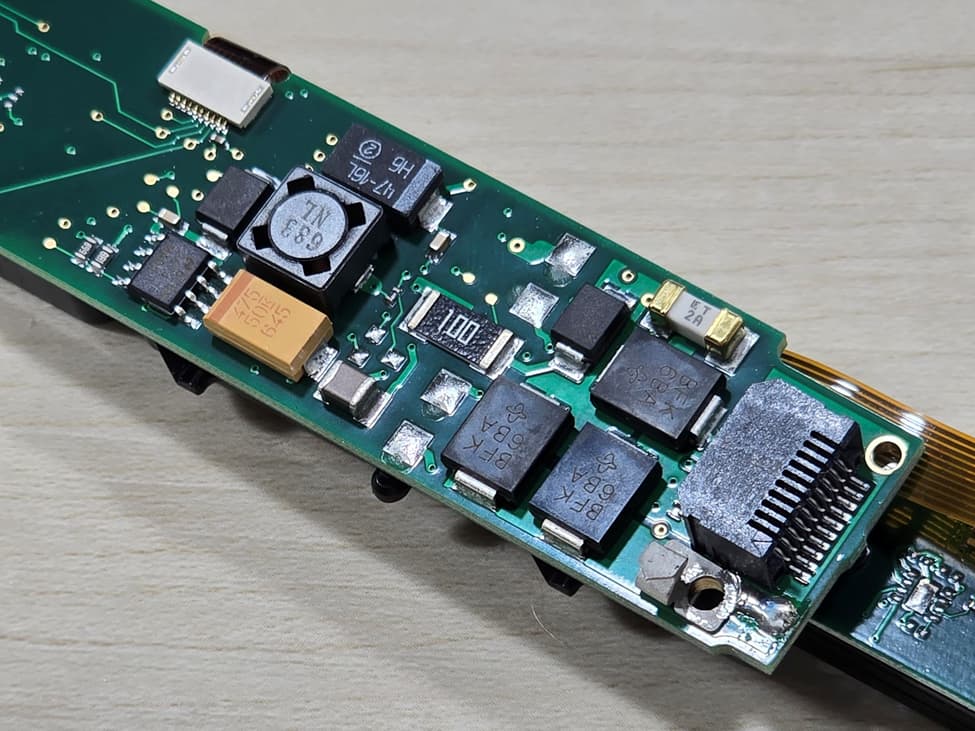
Figure 4: Light curtain power and input protection circuitry.
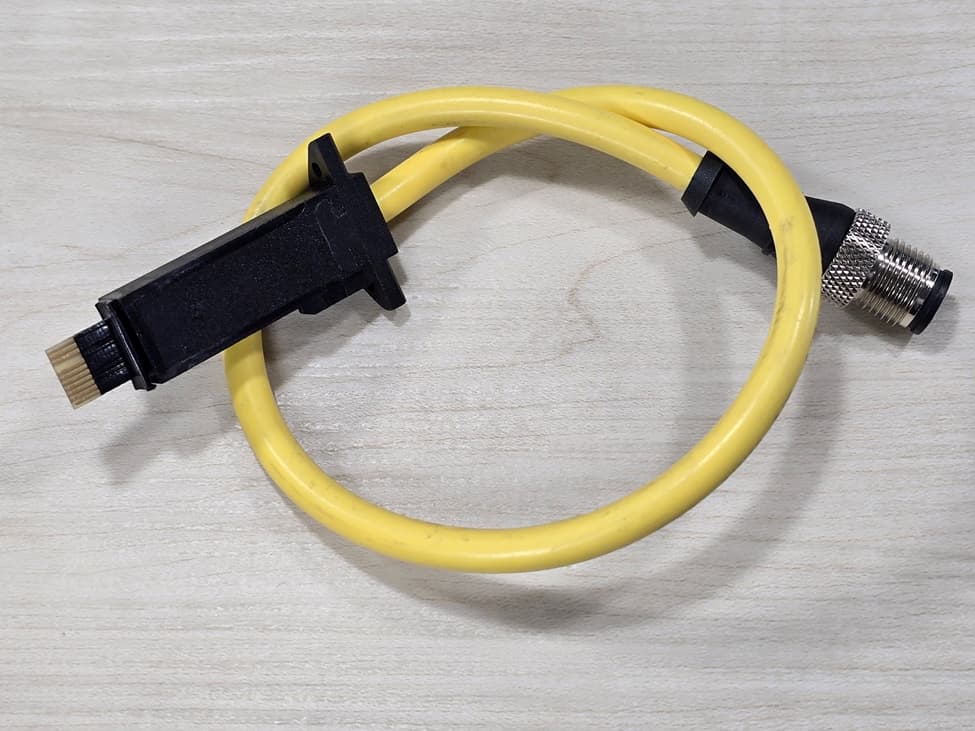
Figure 5: Light curtain cable with card edge protection leading to a M12.
Microcontroller Orchestration
I have a confession for you… I love taking things apart.
However, before I find the screwdriver, I always make a prediction about which microcontroller is used in the product. This light curtain did not disappoint as it features a PIC16F886. I smiled with the memory of programming my first PIC16 microcontroller (in assembler.)
As for the light curtain (emitter side), the exact operation is unknown. However, we can reasonably assume that the microcontroller provides:
- Status report via the onboard LEDs
- Power supply health monitoring
- It may also sequence the IR beam to improve the robust nature of light curtain
The corresponding receiver, presumably another PIC16, is responsible for determining the health of the curtain and controlling the OSSD signals and other signaling as appropriate.

Figure 6: The light curtain incorporates a PIC16 for control.
Parting Thoughts
Remember our original warning: Do not disassemble or modify industrial safety equipment!
At the same time, take every opportunity to safely examine unserviceable equipment and see how it is assembled. For example, reverse-engineer the power section as shown in Figure 4. Learn electronics by understanding the relationship between the bidirectional TVS diode, polarity diode, fuse, and I/O signals.
Best wishes,
APDahlen
 Continue Exploring Industrial Control Systems
If this discussion was helpful, you may also want to explore:
 DigiKey Navigation
- Full Catalog: Industrial Control & Automation
 Related Foundational Articles
If you enjoyed this article, you may also find these related articles helpful:
- Engineering Guide to Light Curtains: Selection, Installation, and Safety
- Electronic Circuit Breaker Protector for Industrial Control
- Should PLC language match technician skill?
About This Author
Aaron Dahlen, LCDR USCG (Ret.), is a Senior Applications Engineer at DigiKey in Thief River Falls. His background in electronics and industrial automation was shaped by a 27-year military career as both technician and engineer, followed by over a decade of teaching.
Dahlen holds an MSEE from Minnesota State University, Mankato. He has taught in an ABET-accredited electrical engineering program, served as coordinator of an electronic engineering technology program, and instructed military technicians in component-level repair.
Today, he has returned to his home in northern Minnesota, completing a decades-long journey that began with a search for capacitors. Read his story here.