


I walked right up to DigiKey’s door and ordered my parts!
My 2-year work anniversary as an application engineer at DigiKey is approaching. To celebrate, I’d like to share my DigiKey journey.
The beginning of the journey
It began in the summer of 1988—I’m 16 and this is the last summer of youth. For a bit of spending money, I was mowing the lawn for a neighbor. When I was finished, I noticed an old farm-set radio in the garage. Emma said, “Take it.” She then asked if I could repair several other radios.
Vacuum tube radios were hit or miss back then. Many still worked as the capacitors had not fully dried up. However, Emma’s radios required recapping as they buzzed loudly when turned on.
Naturally, I went to the Radio Shack in Thief River Falls, Minnesota, but they did not have the replacement capacitors. They suggested I try this other company in town called DigiKey.
DigiKey was unlike anything I had ever seen. The building was large, the reception area was clean, and there was a mystique about the hidden workings in the back room. I was handed a small catalog from which I selected my capacitors. About half an hour later, the parts arrived. They were just what I needed to repair Emma’s Philco radios.
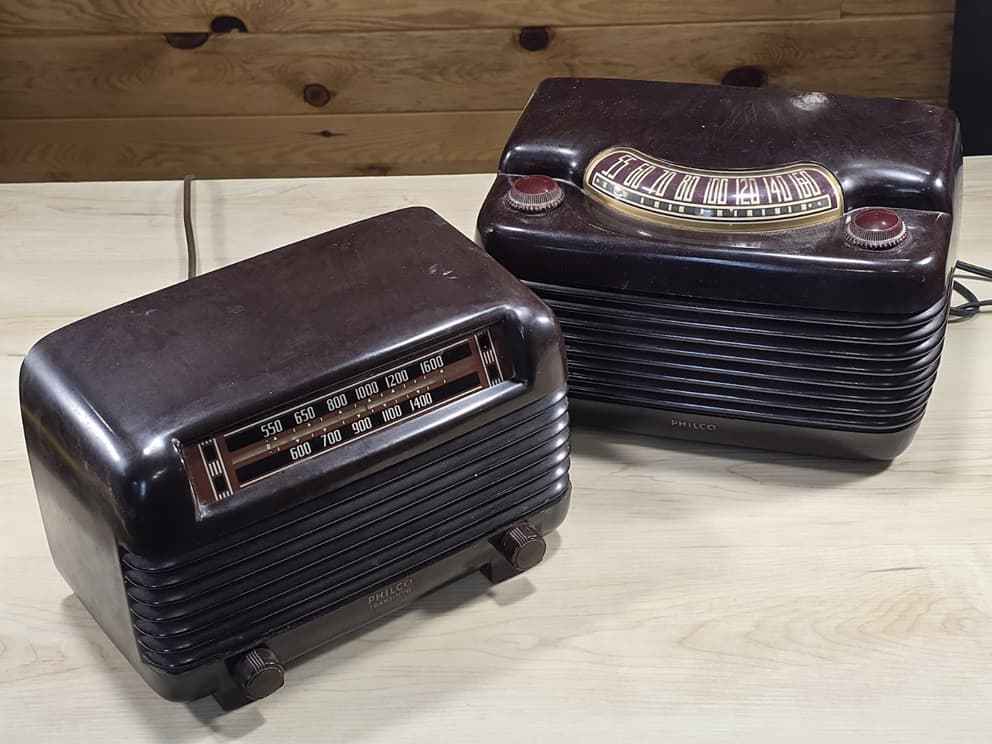
Image of Philco tabletop radio model number 48-250 and 48-460.
The journey
For the next 35 years, I purchased parts from DigiKey. DigiKey was there as I learned electronics and then learned to teach electronics to others. Along the way, I:
-
Built my first amplifiers (tube and transistor).
-
Designed and constructed a digital monitoring and alarm system for the Coast Guard Omega system.
-
Traveled to the ends of the earth including McMurdo Station, Antarctica and St. Paul Island, Alaska.
-
Learned to code with the Microchip PIC16C71 using a DigiKey-sourced programmer and UV eraser.
-
Learned to control MOSFETs without explosive flame and release of magic smoke.
-
Completed my schooling and earned an EET and later an MSEE with a DigiKey-purchased FPGA at the core of my work.
-
Taught at university and community college with DigiKey resistors and microcontrollers.

Author’s first microcontroller project featuring a PIC16C71.
The return home
Today, I’m back home and live near Thief River Falls with a 5-minute commute to DigiKey’s colossal facility.
The mystery is gone as I understand what goes into the secret sauce, and I have the honor of adding a few spices of my own. I have a wonderful job as an Application Engineer where I get to continue my learning journey with the occasional opportunity to reminisce.
At the same time, this is only part of my motivation to write to you, dear reader. DigiKey is more than a job because it employs my family and neighbors. It is for them and for you and your learning journey that I continue to write.
Follow-up and image attribution
We are ephemeral creatures.
Emma sold her home and had an estate auction. By a stroke of luck, I was in Goodridge for the sale and was able to purchase two of the old radios with high nostalgic bids. The images in this article are the very radios I repaired back in 1988.
Sincerely,
Aaron

Chassis of the Philco 48-250 radio featuring loctal and octal vacuum tubes.